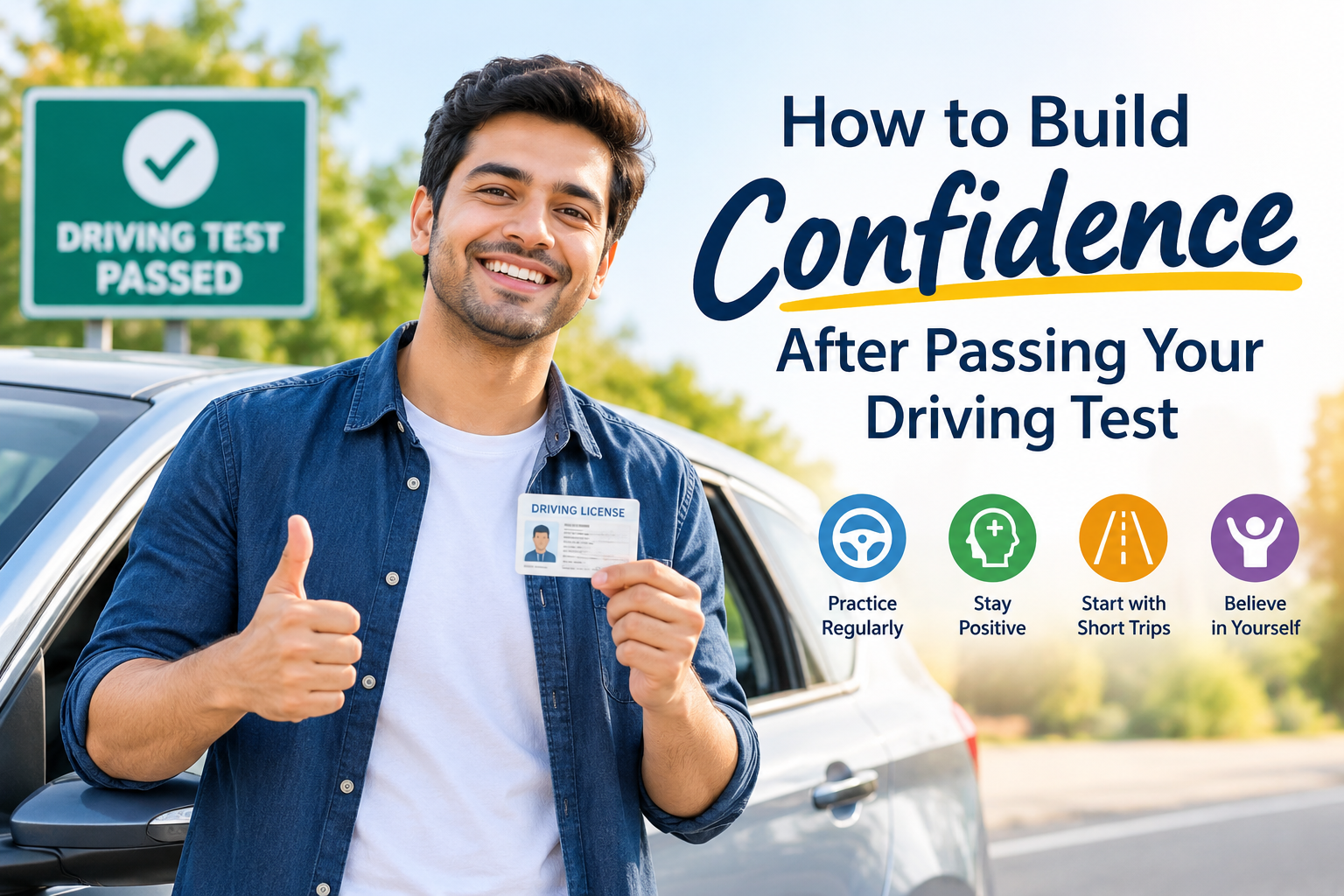

Passing your driving test is an exciting achievement. After completing your lessons, practicing different road situations, and finally receiving your driver’s license, you may feel ready to drive anywhere. However, many newly licensed drivers discover that passing the driving test and feeling completely confident on the road are two different things.
It is completely normal to feel nervous when driving alone for the first time. Without an instructor sitting beside you, you are now responsible for making decisions, observing traffic, managing speed, and handling unexpected situations on your own.
The good news is that driving confidence develops naturally with practice, patience, and experience.
Here are some practical tips to help you become a more confident and safer driver after passing your driving test.
You don’t need to begin your independent driving experience on a busy highway or in heavy traffic.
Start by driving on roads you already know. You may choose routes around your neighborhood, your workplace, school, grocery store, or other familiar destinations.
Familiar roads allow you to concentrate more on driving because you already have an idea of the intersections, traffic patterns, speed limits, and turns.
Once you become comfortable with these routes, gradually introduce new roads and destinations.
Taking this gradual approach can make driving feel much less overwhelming.
One of the biggest mistakes new drivers can make is avoiding driving because they feel nervous.
The less you drive, the less opportunity you have to build experience.
Try to drive regularly, even if your trips are short. A 20- or 30-minute drive can provide valuable practice.
You can use everyday activities as opportunities to practice:
Regular driving helps turn individual driving tasks into habits.
Over time, checking mirrors, signaling, maintaining speed, changing lanes, and positioning the vehicle correctly will feel much more natural.
If you are still nervous about driving alone, consider spending some additional time driving with a calm and experienced driver.
A parent, family member, friend, or professional driving instructor can provide reassurance while you gain more experience.
Choose someone who is patient and avoids unnecessary criticism. A nervous passenger who constantly reacts to every small mistake may actually make you more anxious.
The goal should be to help you become comfortable making decisions independently.
New drivers sometimes believe that confident driving means driving fast or aggressively.
It doesn’t.
A confident driver understands the importance of controlling the vehicle, following traffic laws, maintaining a safe speed, and allowing enough time to react.
You don’t have to keep up with an impatient driver behind you.
Maintain an appropriate speed for the road and conditions. If someone is following too closely, remain calm and focus on driving safely rather than trying to satisfy the other driver.
Confidence comes from control, not speed.
Parking can be one of the biggest sources of anxiety for newly licensed drivers.
Don’t limit your practice to one easy parking space. Gradually practice different situations, including:
Start in an empty or quiet area and practice until you understand how your vehicle moves.
Remember that it is perfectly acceptable to take your time when parking. If you need to reposition the vehicle, do so carefully rather than rushing.
You won’t always have perfect weather when you need to drive.
As you gain experience, you should learn how your vehicle behaves in different conditions. Rain, fog, snow, strong winds, and poor visibility can all require adjustments to your driving.
For example, wet roads can reduce traction and increase stopping distance. Poor visibility can make it harder to see other vehicles, pedestrians, and road markings.
When weather conditions become challenging:
If weather conditions are severe and you are not comfortable driving, it may be safer to postpone the trip when possible.
Every trip can teach you something.
After reaching your destination, think briefly about the drive.
Ask yourself:
This doesn’t mean criticizing yourself for every small mistake.
Instead, use each experience as a learning opportunity.
The objective is continuous improvement rather than perfection.
Every driver makes mistakes.
Even experienced drivers can occasionally miss a turn, choose the wrong lane, stall a vehicle, or make a parking mistake.
A mistake doesn’t automatically mean that you are a bad driver.
What matters is how you respond.
Stay calm, correct the situation safely, and continue paying attention to the road. Avoid becoming so focused on a previous mistake that you stop paying attention to what is happening around you.
Remember: one difficult moment does not define your driving ability.
Confidence becomes harder to build when your attention is divided.
Avoid unnecessary distractions while driving. Put your phone away, set your navigation before starting whenever possible, and avoid activities that take your attention away from the road.
Your primary responsibility is to operate the vehicle safely and remain aware of surrounding traffic.
As your driving experience increases, you will become better at managing normal road situations—but that doesn’t mean distractions become safe.
Defensive driving is an important skill for every driver, particularly for new drivers.
Defensive driving means staying alert and anticipating what other road users might do.
For example, don’t assume that another driver will always:
Watch the road carefully and leave yourself enough space and time to react.
Defensive driving isn’t about being afraid of other drivers. It is about being prepared for situations that may not go exactly as expected.
Highway driving can seem intimidating after passing your test, particularly because of higher speeds and more traffic.
Before driving long distances alone, practice highway driving with an experienced driver if possible.
Focus on:
Start with shorter highway trips and gradually increase the distance as you become more comfortable.
GPS navigation can make unfamiliar trips easier, but you should still pay attention to the road rather than blindly following every instruction.
Before starting your journey, review the route when possible.
Know approximately:
If you miss a turn, don’t panic.
Your navigation system can usually recalculate the route. Never make a sudden or dangerous maneuver simply because you missed an exit or turn.
Passing your driving test doesn’t mean you have to stop learning.
If you are uncomfortable with a particular skill—such as highway driving, parallel parking, night driving, or driving in heavy traffic—additional lessons can be extremely useful.
A professional instructor can identify areas that need improvement and provide structured practice.
Some new drivers also choose defensive driving or advanced driving courses to develop their skills further.
Perhaps the most important tip is to be patient.
You don’t become an experienced driver immediately after receiving your license.
Your driving confidence develops through repeated experiences.
The first solo drive may feel stressful. After several trips, it may become easier. After several months of regular driving, many situations that once seemed intimidating may feel routine.
Don’t compare your experience with another driver.
Everyone develops confidence at a different pace.
Passing your driving test proves that you have demonstrated the required driving skills. The next stage is developing those skills through real-world experience.
Start with familiar roads, practice regularly, learn defensive driving, and gradually expose yourself to more challenging situations. Most importantly, focus on safe and responsible driving rather than trying to look confident.
With time, practice, and the right attitude, your confidence will grow naturally.
If you have recently passed your driving test but still don’t feel completely comfortable behind the wheel, additional professional instruction can help.
A qualified driving instructor can help you practice specific skills, understand difficult road situations, and become more comfortable driving independently.
Remember: you don’t need to be a perfect driver to be a confident driver. You need to keep learning, stay alert, and practice safe driving every time you get behind the wheel.
92 Main Street WoodBridge, New Jersey 07095 USA
techdrivingschool [ @ ] gmail.com
7327504455
#000048