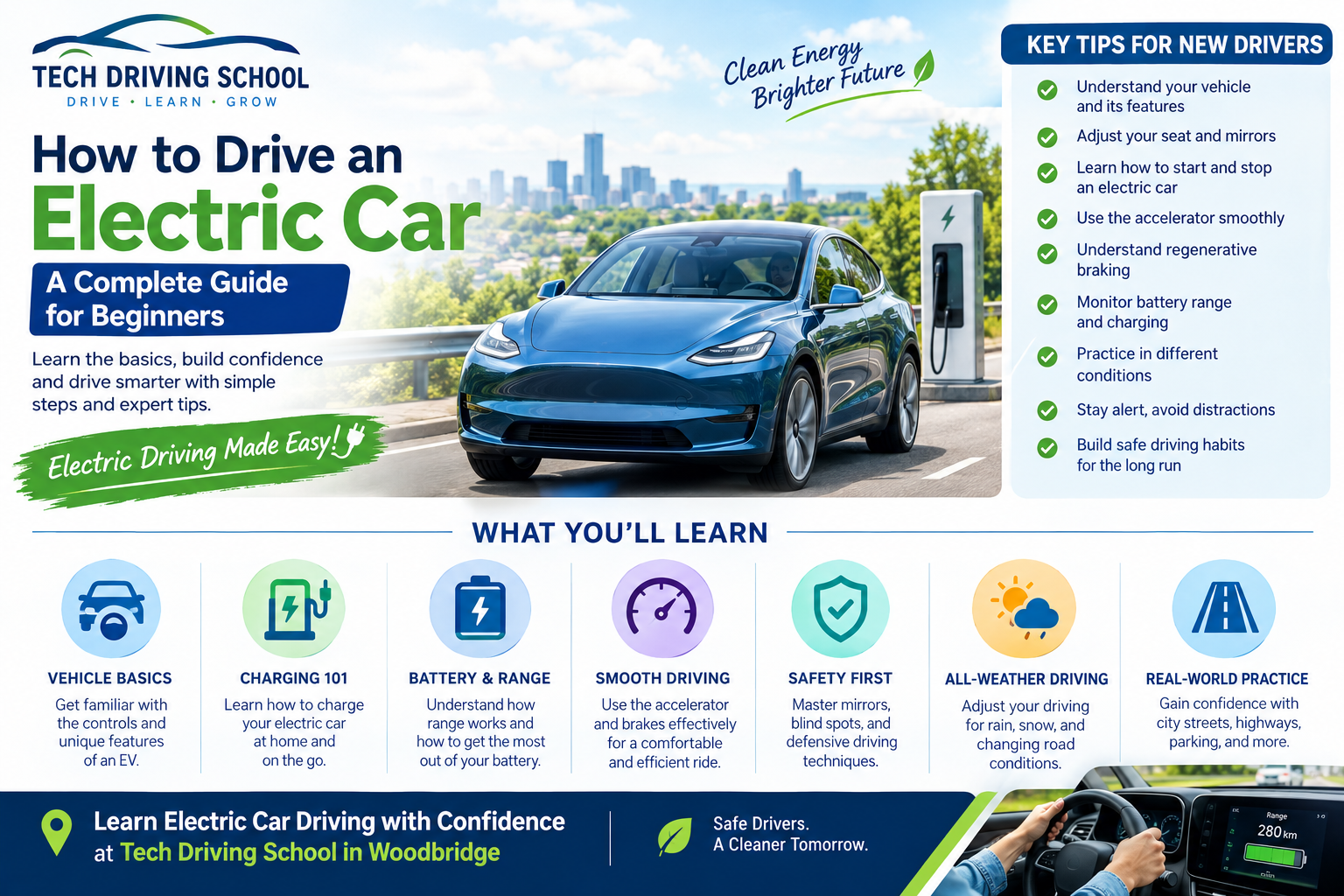

Electric vehicles (EVs) are becoming an increasingly familiar sight on roads across the United States. With advances in battery technology, charging infrastructure, and vehicle design, more people are considering electric cars as an alternative to traditional gasoline-powered vehicles.
For beginners, however, driving an electric car can feel slightly different. EVs have unique features such as regenerative braking, battery range displays, charging systems, and instant electric motor response. Understanding these features can help new drivers feel more comfortable and confident behind the wheel.
If you are interested in electric car driving in Woodbridge, learning the fundamentals before getting on the road is a smart first step. Whether you are a new driver, a parent helping a teenager learn, or someone switching from a gasoline-powered vehicle to an EV, this guide covers the essential things you should know.
An electric vehicle is powered primarily by electricity stored in a rechargeable battery.
Unlike a traditional gasoline-powered car, an EV does not rely on an internal combustion engine to generate power. Instead, electricity is supplied to an electric motor, which turns the vehicle’s wheels.
This creates several noticeable differences while driving.
Electric cars are generally:
Although the technology is different, the fundamentals of safe driving remain the same. Drivers still need to understand traffic laws, maintain proper following distances, check mirrors, use turn signals, and remain alert.
Learning to drive an EV in the Woodbridge area can give new drivers experience with modern vehicle technology while developing fundamental driving skills.
Woodbridge-area roads can include a combination of residential streets, busy intersections, commercial areas, highways, parking lots, and different traffic conditions. Learning how to handle an electric vehicle in different environments can help drivers become more adaptable.
A professional Driving School in Woodbridge can help students develop safe habits while becoming familiar with the characteristics of an electric vehicle.
Before driving an electric car for the first time, spend some time becoming familiar with its controls.
Different EV models may have different layouts and features, so never assume that every electric vehicle operates in exactly the same way.
Before starting your trip, identify:
Knowing where these controls are located will allow you to focus more attention on the road once you begin driving.
One of the first differences new EV drivers notice is how quietly an electric vehicle operates.
A gasoline-powered car usually produces engine sounds when it starts. An EV may be almost silent.
Depending on the vehicle, starting may involve pressing a power button while holding the brake pedal or simply activating the vehicle with an authorized key or device.
A typical process is:
Always follow the instructions provided by the vehicle manufacturer.
Electric motors can deliver power very quickly.
This means an EV may respond immediately when you press the accelerator. For a new driver, this can initially feel more sensitive than a traditional gasoline-powered vehicle.
When starting from a stop, press the accelerator gradually.
Smooth acceleration helps you maintain better control and can also improve passenger comfort and energy efficiency.
As you become more familiar with the vehicle, you will learn how much pressure is needed to achieve the desired speed.
Regenerative braking is one of the most important concepts in electric car driving.
When an EV slows down, the motor can help recover some energy and send it back to the battery.
Depending on the vehicle and selected driving settings, releasing the accelerator may cause the vehicle to slow noticeably.
This can feel different from driving a traditional car.
New EV drivers should practice regenerative braking in a safe, low-traffic area before using it extensively in busy traffic.
Understanding how quickly the vehicle slows when you release the accelerator can help you develop smoother driving habits.
Some electric cars offer a feature commonly known as one-pedal driving.
With this feature, releasing the accelerator can cause the vehicle to decelerate significantly through regenerative braking.
It does not mean that the brake pedal disappears or should never be used.
Drivers must still be ready to use the brake pedal whenever they need additional stopping power.
One-pedal driving can be convenient once a driver becomes familiar with it, but beginners should practice gradually and understand how their specific vehicle behaves.
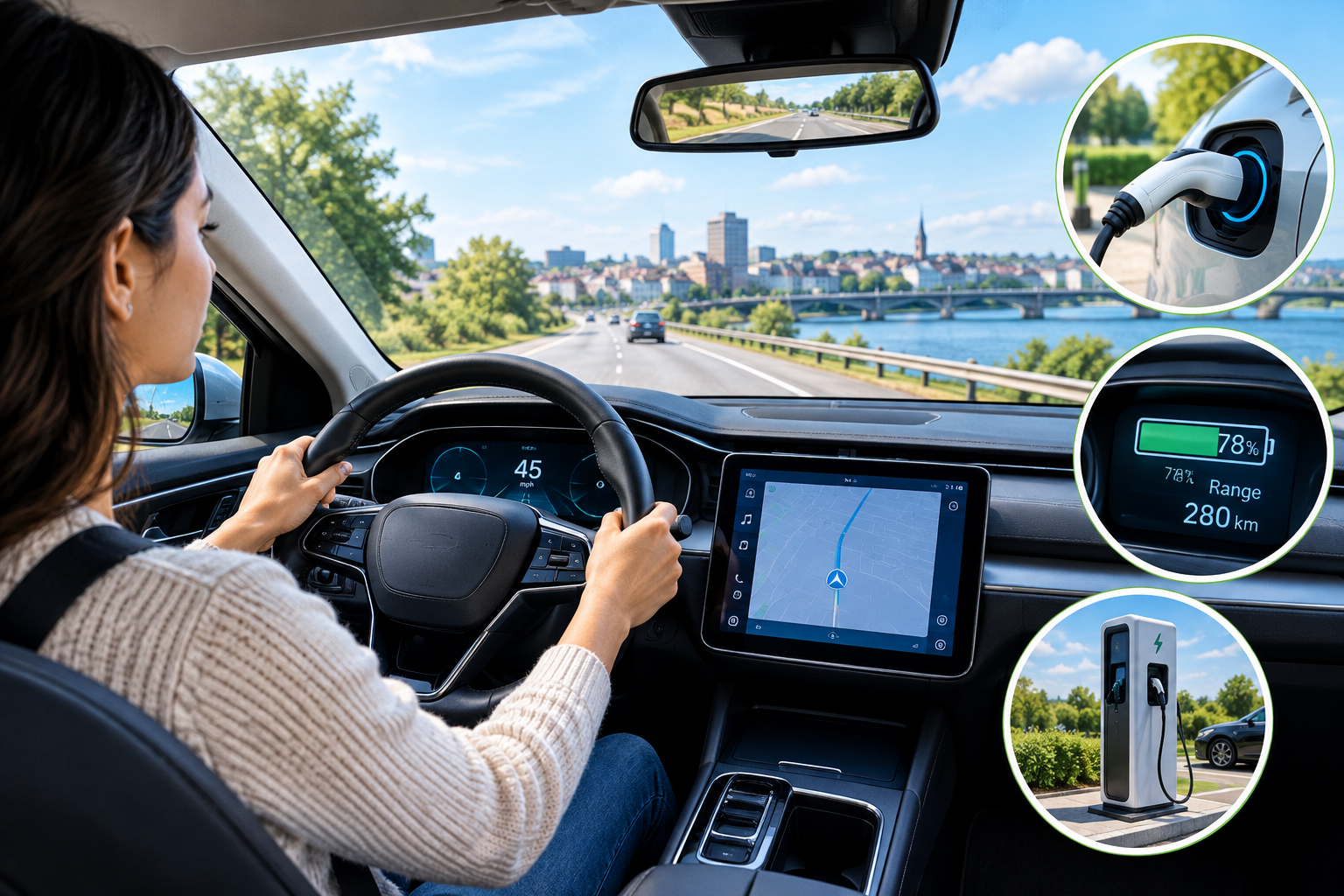
Instead of watching a traditional fuel gauge, EV drivers need to pay attention to battery charge and estimated range.
The dashboard usually provides information about how much battery remains and how far the vehicle estimates you can travel.
However, the estimated range can change based on several factors, including:
Because of this, drivers should avoid relying exclusively on the displayed range.
Plan ahead when taking longer trips and know where charging stations are available.
Charging is an important part of owning and driving an electric vehicle.
EVs can be charged using different types of charging equipment. Charging speeds vary depending on the vehicle, charger, battery condition, and other factors.
Before taking a longer trip around or beyond Woodbridge, consider:
Developing good charging habits can reduce the stress of worrying about battery range.
Electric cars are often much quieter than gasoline-powered vehicles.
This is especially noticeable at lower speeds.
Pedestrians and cyclists may not hear an EV approaching as easily as they might hear a traditional vehicle. Drivers therefore need to pay close attention to their surroundings.
Be particularly careful around:
Never assume that a pedestrian or cyclist has noticed your vehicle.
Mirror awareness is an essential part of safe electric car driving.
Before changing lanes, drivers should:
Even advanced EV technology cannot replace good observation skills.
A professional Driving School in Woodbridge can help new drivers practice these habits until they become natural.
New drivers should gradually build experience in different environments.
Start with quieter roads before progressing to busier traffic situations.
Practice:
Learn to manage stop signs, parked vehicles, pedestrians, and neighborhood intersections.
Practice maintaining lane position and responding to traffic signals.
Learn proper merging, lane changes, following distance, and speed management.
Practice low-speed control, reversing, parking, and awareness of pedestrians.
Develop awareness of headlights, visibility limitations, and changing traffic conditions.
Gradual exposure can help new drivers build confidence without feeling overwhelmed.
Many modern electric cars include advanced driver-assistance features.
Depending on the vehicle, these may include:
These features can provide useful assistance, but they do not replace the driver’s responsibility.
Technology can make mistakes or have limitations. Drivers should remain attentive and ready to control the vehicle at all times.
Weather conditions can affect every vehicle, including electric cars.
Rain, snow, ice, fog, and strong winds can reduce visibility and traction.
When conditions are difficult:
Safe driving means adjusting your behavior to the environment rather than assuming the vehicle’s technology will handle everything.
Electric vehicles often have advanced screens and connected technology, which can be useful but also distracting.
Before starting your trip, set up your navigation, music, and climate controls.
Once you’re driving, keep your attention on the road.
Avoid:
No technology is more important than your attention.
Electric cars can be very easy to maneuver at low speeds, but beginners still need to practice parking.
Work on:
Use mirrors, cameras, and direct observation together.
Never rely solely on a parking camera or sensor.
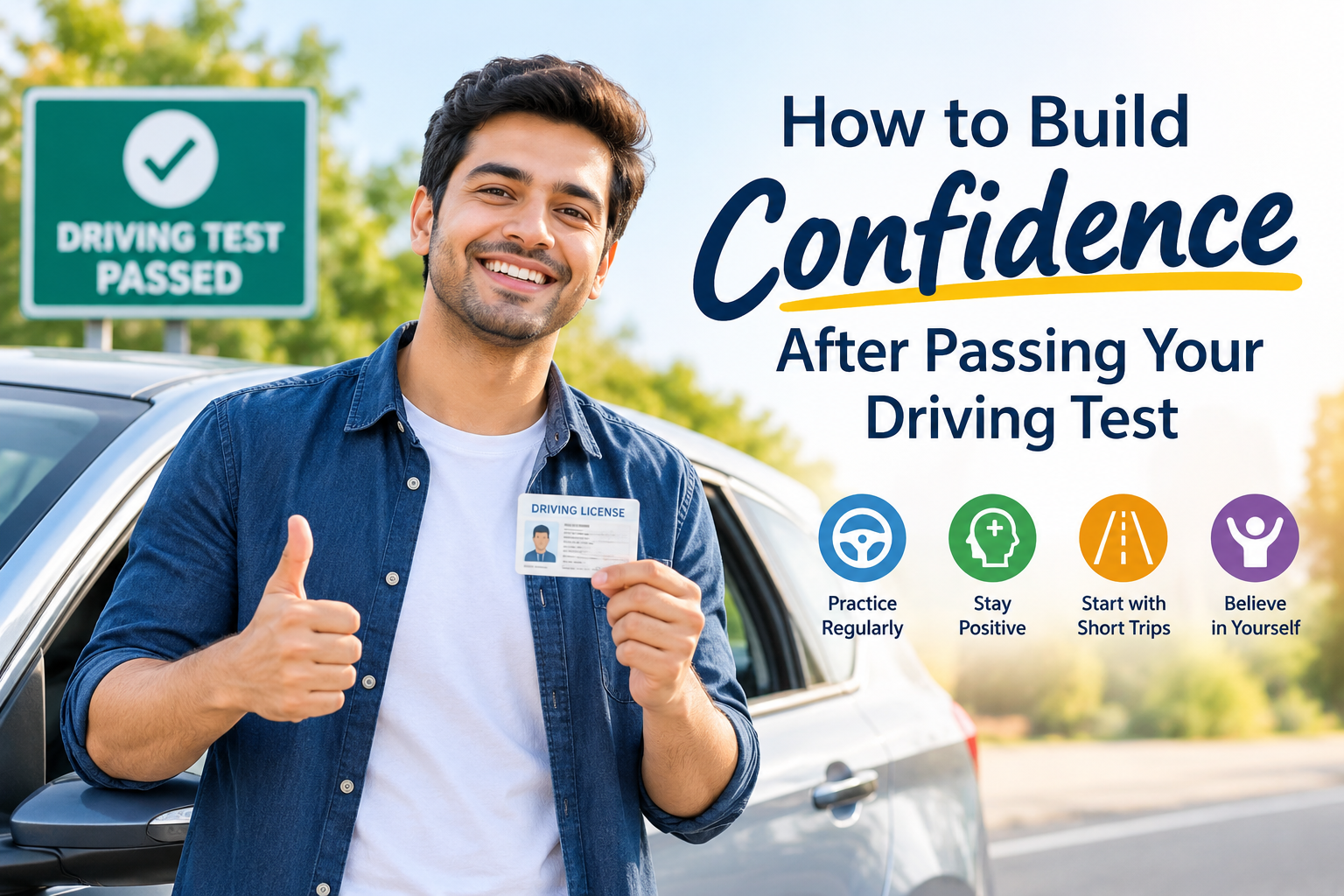
Learning to drive is about more than passing a road test. The goal is to develop habits that help you remain safe long after you receive your license.
A professional Driving School in Woodbridge can provide structured training and help students develop:
For students learning in an electric vehicle, professional instruction can also help them understand EV-specific characteristics such as regenerative braking, acceleration response, and battery awareness.
Electric car driving in Woodbridge can be an exciting opportunity for new drivers to learn modern vehicle technology while developing important road skills.
Although electric vehicles operate differently from gasoline-powered cars, the basic principles of safe driving remain unchanged. Drivers should stay alert, follow traffic laws, maintain safe distances, check mirrors and blind spots, avoid distractions, and adapt to traffic and weather conditions.
If you’re new to electric vehicles, take the time to understand your car before driving in busy traffic. Practice acceleration, braking, parking, lane changes, and other essential skills in a controlled environment.
Most importantly, don’t be afraid to seek professional instruction. Learning with an experienced Driving School in Woodbridge can help you build confidence, understand your vehicle, and develop safe driving habits that can last a lifetime.
With proper training and regular practice, you can enjoy the benefits of electric vehicle technology while becoming a safer, more confident driver on Woodbridge roads and beyond.
92 Main Street WoodBridge, New Jersey 07095 USA
techdrivingschool [ @ ] gmail.com
7327504455
#000048