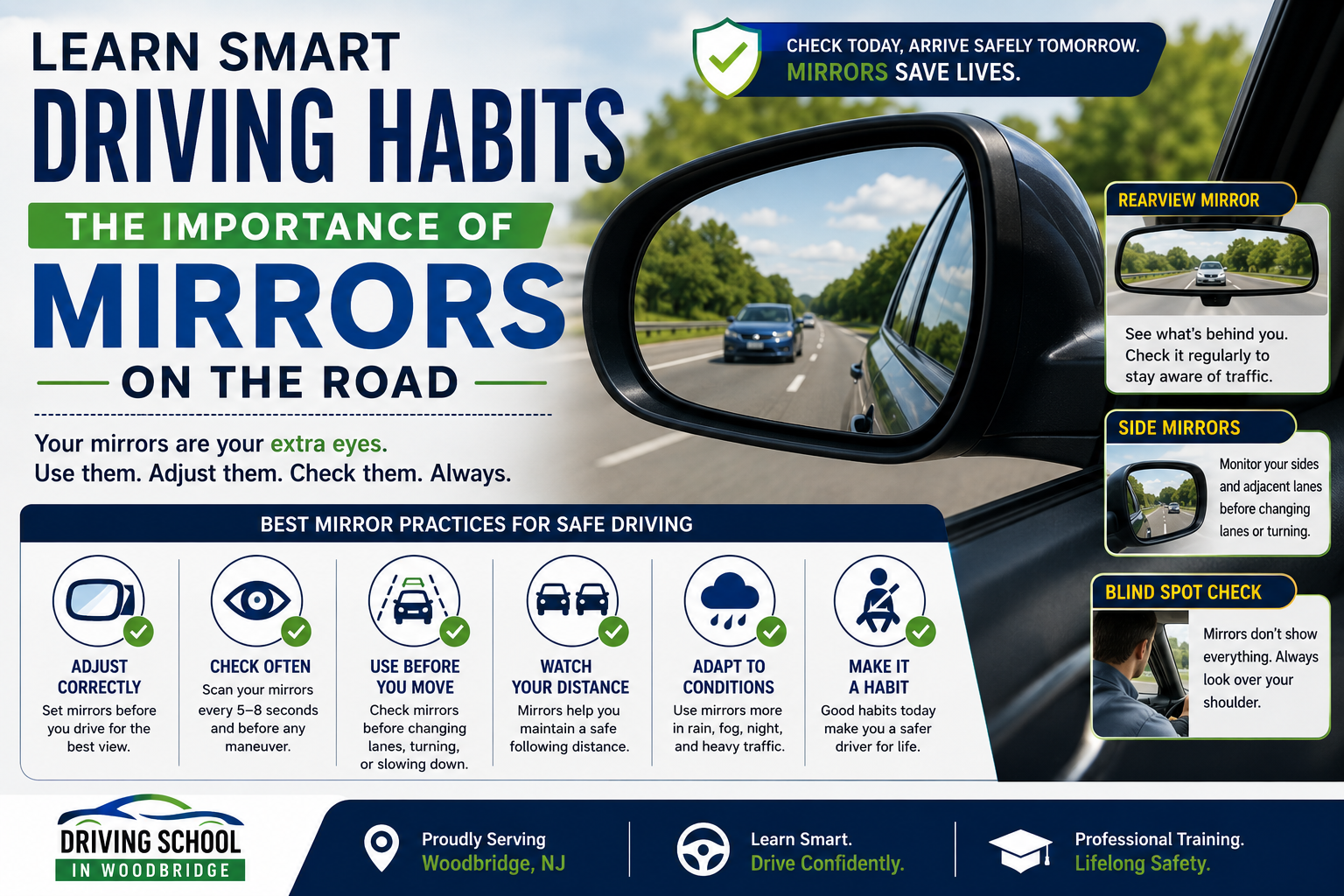

When you’re behind the wheel, your ability to see what’s happening around your vehicle can be the difference between a smooth trip and a dangerous situation. One of the most overlooked tools for safe driving? Your side mirrors.
These two simple pieces of glass give you a broader perspective of the road, helping you spot approaching vehicles, cyclists, and pedestrians. But here’s the truth—many drivers don’t use their side mirrors correctly, which can lead to blind spots and missed hazards.
In this guide, we’ll explore how to adjust, use, and maintain your side mirrors so you can drive with confidence and keep those blind spots to a minimum.
Your car’s side mirrors, along with the rearview mirror, make up your primary visual safety system. Without them, you’d have to twist and turn constantly just to know what’s happening beside and behind you.
Key benefits of side mirrors:
Reduce blind spots when adjusted correctly.
Help in safe lane changes and merging.
Provide better visibility of nearby vehicles, cyclists, and pedestrians.
Assist in parking and reversing.
However, side mirrors aren’t perfect—they have inherent limitations that require you to combine them with other safety habits.
A blind spot is any area around your vehicle that you can’t see through your mirrors alone. These spots exist because your side mirrors only cover a certain angle.
Common blind spot dangers include:
Cars overtaking you from behind.
Motorcycles traveling between lanes.
Cyclists riding close to your vehicle.
Pedestrians stepping off the curb unexpectedly.
Pro tip: Even perfectly adjusted mirrors can’t remove blind spots completely. That’s why a quick shoulder check is still essential before changing lanes.
Many drivers make the mistake of angling their side mirrors so they can see too much of their own car. While this feels familiar, it actually shrinks your field of vision.
Step-by-step side mirror adjustment:
Driver’s side mirror:
Sit in your normal driving position.
Lean your head against the driver’s window.
Adjust the mirror so you can just barely see the side of your car.
Passenger’s side mirror:
Sit in your normal driving position.
Lean toward the center console.
Adjust the mirror so you can just barely see the side of your car.
This wider angle helps cover more of the adjacent lanes, minimizing blind spots.
Your side mirrors should be part of a constant scanning routine while driving. Instead of only glancing when changing lanes, check them regularly to stay aware of surrounding traffic.
Situations where side mirrors are essential:
Changing lanes: Always check both the side mirror and your blind spot with a shoulder glance.
Merging onto highways: Watch for fast-approaching vehicles in the lane you’re joining.
Overtaking another vehicle: Confirm no one is in the lane you’re moving into.
Parking: Use side mirrors to gauge distance from curbs or other vehicles.
Reversing: Helps spot low obstacles or people approaching from the side.
Even experienced drivers fall into bad habits. Here are mistakes to watch out for:
Relying only on mirrors: Always pair mirror checks with shoulder glances.
Ignoring the passenger side mirror: This mirror is just as important for detecting vehicles on your right.
Not checking mirrors often enough: Waiting until the last second to check can cause dangerous surprises.
Failing to adjust mirrors for different drivers: If someone else drove your car, reset the mirrors before hitting the road.
Modern vehicles often come with blind spot monitoring systems—small lights or alerts that warn you when another vehicle is in your blind spot.
If your car doesn’t have this feature, you can attach stick-on convex mirrors to your side mirrors. These small, inexpensive add-ons widen your field of vision, making it easier to spot hazards.
Clear, clean mirrors are essential for good visibility. Dirty or foggy mirrors can distort what you see, making it harder to judge distances.
Maintenance tips:
Clean mirrors regularly with glass cleaner.
Wipe off rainwater or snow before driving.
Check for cracks or loose mounts and repair promptly.
Use heated mirrors (if available) in icy conditions.
At night, headlights from cars behind you can create glare in your side mirrors, making it hard to see.
Solutions:
Adjust your side mirrors slightly downward to reduce direct glare.
Use anti-glare mirror films.
Keep mirrors spotless to minimize light scatter.
Whenever you change lanes or merge:
Mirror: Check your rearview and side mirrors.
Shoulder: Look over your shoulder to check blind spots.
Mirror: Confirm the space is still clear before moving.
This habit might take a split second, but it can prevent costly accidents.
Your side mirrors aren’t just there to pass a driving test—they’re one of your most valuable safety tools on the road. By adjusting them properly, scanning regularly, and combining them with shoulder checks, you can dramatically reduce blind spots and increase your awareness.
So next time you get in your car, take 10 seconds to set your mirrors right. It’s a small habit that can make a big difference in keeping you, your passengers, and others on the road safe.
92 Main Street WoodBridge, New Jersey 07095 USA
techdrivingschool [ @ ] gmail.com
7327504455
#000048